

April Fools Day pranks fade away, but the threat of scams remains constant.
Unfortunately, scammers aren't taking a break.
Spring signals a surge in hacker activity—not due to negligence, but because busy, distracted teams can accidentally let suspicious behavior slip through unnoticed.
Here are three cunning scams targeting vigilant, hard-working employees right now.
As you read, ask yourself: Does my team consistently pause to spot these threats?
Scam #1: The Toll or Parking Fee Text
An employee receives a text:
"Unpaid toll fee of $6.99. Pay within 12 hours to avoid penalties."
The message references real toll systems—E-ZPass, SunPass, FasTrak—matching their location. The small fee seems harmless, so they pay quickly to avoid inconvenience.
But the payment link is fraudulent.
FBI reports show over 60,000 complaints about fake toll texts in 2024 alone, with a 900% increase in 2025. Thousands of fake websites mimic state toll agencies, signaling how lucrative this scam has become—sometimes even targeting areas without toll roads.
This scam succeeds because the fee seems low-risk and recent toll or parking use makes the claim believable.
Protection tip: Genuine toll agencies never demand immediate payment via text. Train your team to always verify directly on official websites or apps. Avoid replying to suspicious texts, as responding confirms an active number inviting more scams.
Convenience tempts victims; strict payment policies shield them.
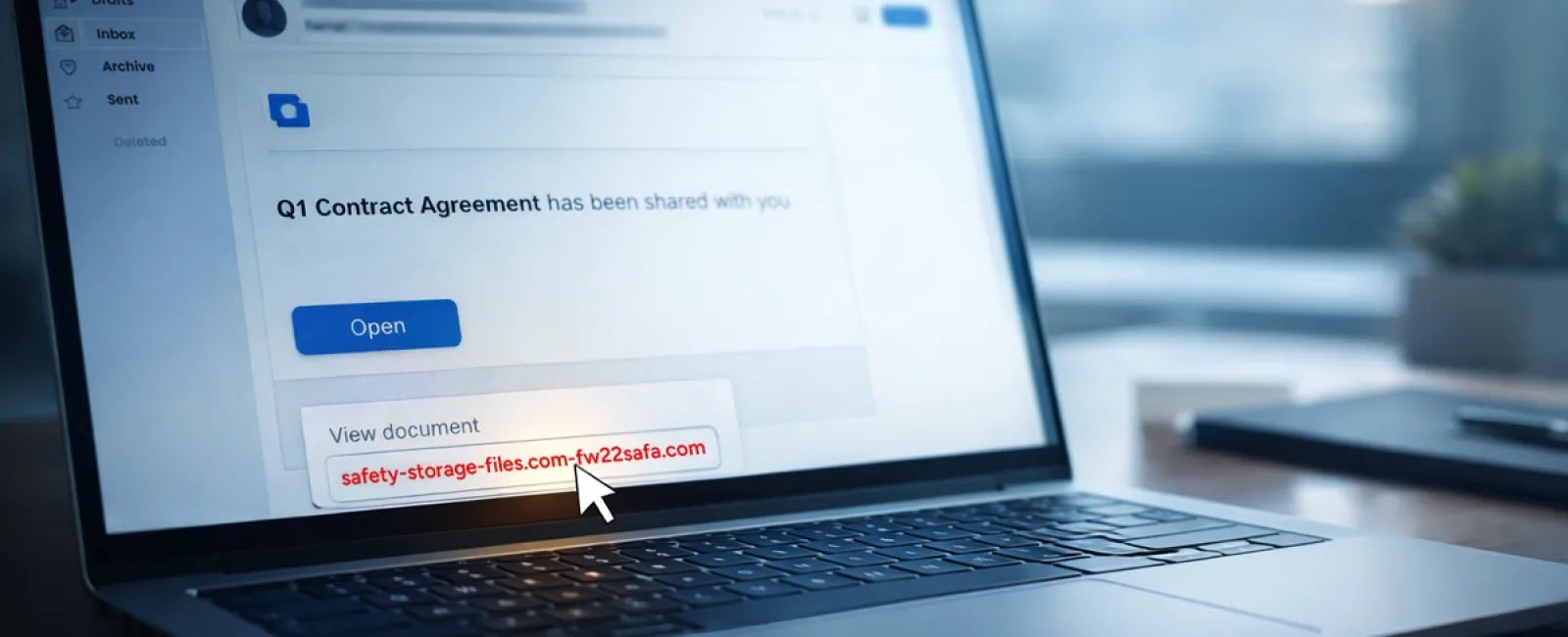
Scam #2: "Your File Is Ready" Emails
This scam blends seamlessly into daily workflow.
An employee gets an email about a shared file—often a contract, spreadsheet, or document from platforms like DocuSign, OneDrive, or Google Drive.
The sender looks legitimate and the format mirrors genuine notifications.
Clicking the link leads to a fake login page where credentials are stolen, granting hackers access to your company's cloud environment.
Phishing on trusted platforms skyrocketed by 67% in 2025. Google Slides phishing alone surged over 200% recently. Employees are seven times more likely to fall for these disguised attacks since notifications appear authentic.
Newer scams even use compromised accounts to send real sharing alerts from legitimate servers, avoiding spam filters.
Protection tip: If a file isn't expected, employees should never click email links. They should log into the platform directly to check. Limit external sharing permissions and enable alerts for abnormal login activity—quick IT fixes that make a huge difference.
Simple habits create powerful security.
Scam #3: The Perfectly Written Email
Gone are the days when phishing emails carried glaring mistakes.
2025 research shows AI-generated phishing messages have a 54% click rate—more than four times higher than human-written scams—because they appear professional and use real company info scraped from LinkedIn and websites.
These attacks target specific departments—HR gets fake employee verifications, finance sees bogus vendor payment instructions. One test revealed 72% engagement with vendor spoof emails, markedly higher than other phishing types.
Emails strike a balance: professional, urgent, and unalarming—just a regular workday inbox message.
Protection tip: Always verify sensitive requests—credential changes or payment updates—via a second channel like phone or in-person. Hover over sender addresses to check real domains. Treat urgency in emails with suspicion—it's often a red flag.
Effective security doesn't incite panic, it builds caution.
Key Takeaway
All these scams exploit trust, authority, timing, and the expectation that "this will only take a moment."
The real vulnerability is not careless employees, but systems relying on flawless judgment under pressure.
If a hasty click can cause chaos, the problem lies with processes—not people.
And process flaws are fixable.
How We Can Support You
Most business owners don't want another overwhelming project or to become cybersecurity trainers.
They want confidence that their company is protected.
If you're worried about your team's risk—or know someone who should be—let's talk.
Book a no-pressure discovery call where we'll discuss:
- Current risks businesses like yours face
- How everyday work opens doors to threats
- Smart ways to strengthen security without slowing down operations
No hype, no scare tactics—just clear guidance to reduce exposure.
Click here or give us a call at 888-820-2992 to schedule your free 15-Minute Discovery Call.
Not for you? Please share this with someone who needs this warning. Knowing what to spot can turn a "would have clicked" into a "nice try."